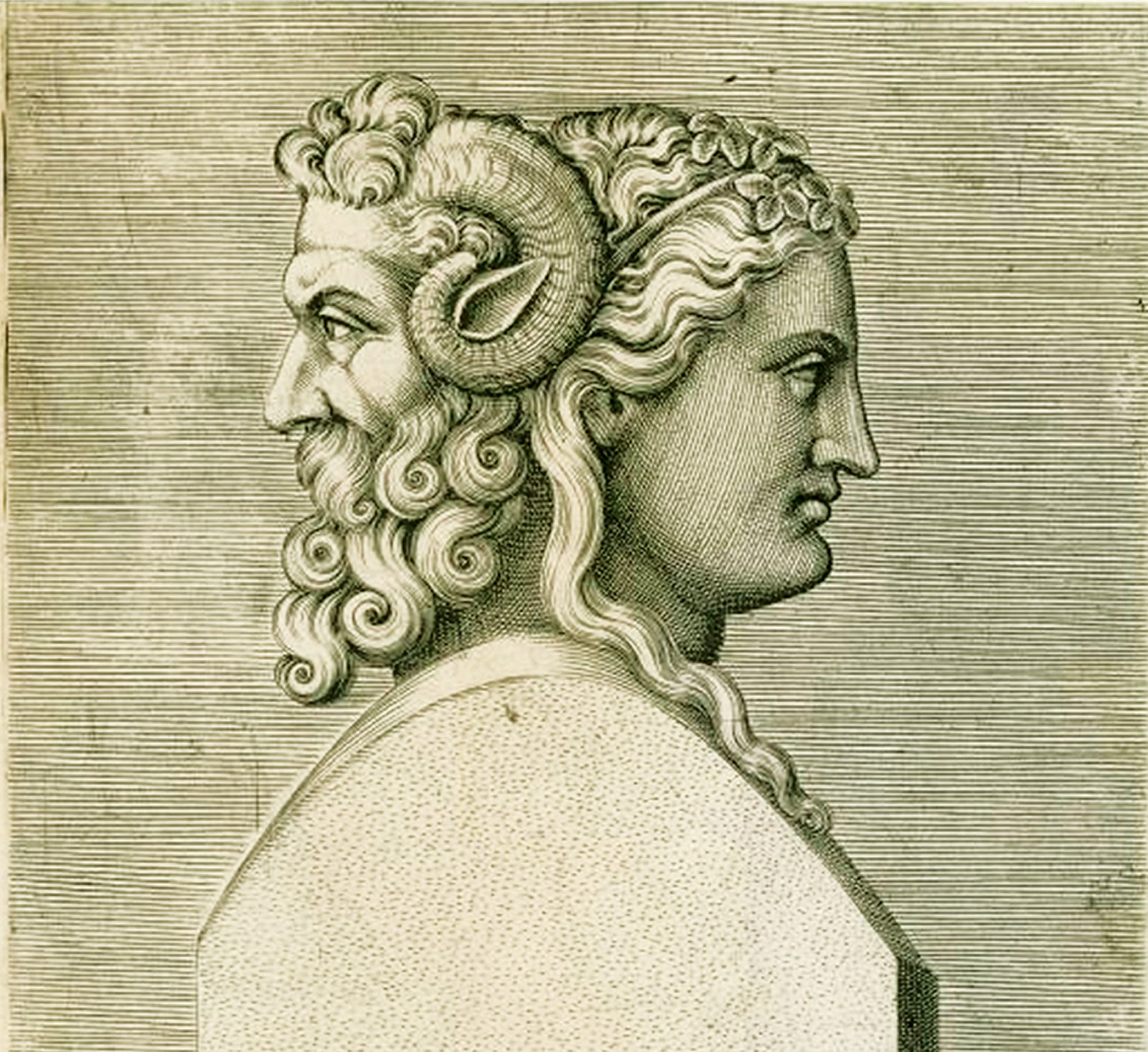
Bust of Janus from the New York Public Library
This month’s name derives from the Latin word Ianua, meaning “door” or “gate,” representing new beginnings. It is also probably named for Janus, the god of gates and doorways, beginnings and endings, entrances and departures, who is depicted with two faces, a young man looking forward and an old man looking back.
Even though I am posting this several days into the month, the entries begin with January 1 because it’s the trivia—a little history and context—that makes these holidays interesting and worth writing about, in my opinion. It’s an annotated list that happens to correspond to the dates of the month.
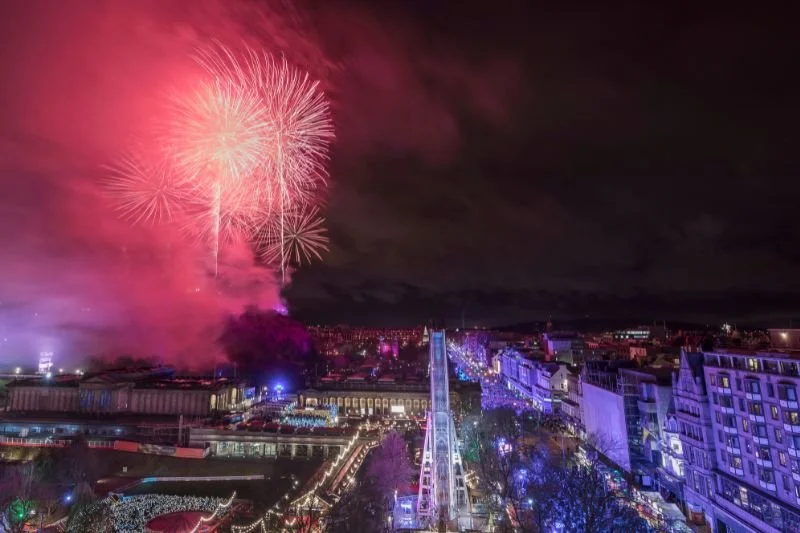
Fireworks over Edinburgh in celebration of Hogmanay
Thu.–Sat. 1–3. In Japan, the New Year is celebrated for three days and includes visits to shrines and temples at midnight, with food stalls and other vendors. In New Zealand, it’s a two-day holiday. In Scotland, the holiday begins with New Year’s Eve, called Hogmanay, and ends with Second January.
Fri., 2. In parts of Switzerland, Liechtenstein and Alsace, France, the day after New Year’s is Berchtold Day, when people meet in pubs and restaurants to socialize. The name could be derived from the verb “berchten,” meaning “to walk around asking for food,” as in mummery (or wassailing, or trick-or-treating); but there are also some possible connections to a Germanic alpine goddess named Perchta, or other ancient customs.
Mon., 5. Twelfth Night: There is some confusion as to whether this falls on Jan. 5 or 6; however, the Oxford English Dictionary (available online through your public library) states that it is the evening before Twelfth Day, which it defines as the twelfth day after Christmas, or January 6, aka Epiphany. The confusion seems to stem from the phrase “twelve days of Christmas,” leading folks to assume that Christmas is day one, but, according to OED, it was originally the twelve days after Christmas, beginning with December 26. It’s also likely that the old tradition, still observed by Jews and Muslims, of a day beginning upon the previous sunset pertains here, making sunset on Dec. 25 the beginning of the first night of this festival, just as Christmas Eve, Dec. 24, is the beginning of Christmas Day.
In Sweden, this is a de facto half holiday, when most businesses close early.
Tue., 6. Christians celebrate Epiphany as the day when the magi (aka Three Kings) visited the Christ child, thus revealing him to the world. Some Christians call it Three Kings Day. It is also thought to be the day when the adult Jesus was baptized by John the Baptist, and began his ministry.
To many Americans, it is also a day to recall the attack on the US Capitol by a crowd of Trump supporters in 2021.
Wed., 7. Many traditional Orthodox churches have still not adopted the “new” calendar enacted by Pope Gregory XIII in 1582 (the Gregorian or common calendar), and as a result observe their holidays by the Julian calendar, which is now 13 days behind the common calendar, placing their Christmas (aka Feast of the Nativity) at January 7. That includes the Orthodox Church in Russia, some American Orthodox churches, and, until recently, the Ukrainian Orthodox Church. In 2023, Ukraine changed its official Christmas holiday to Dec. 25, in a pointed break with the Russian Church. Many modern Orthodox churches in America also observe Christmas on Dec. 25.
Thu., 8. Japan’s Coming of Age Day was established in 1948 to congratulate youth who turned 20, the age of legal adulthood, in the previous year.
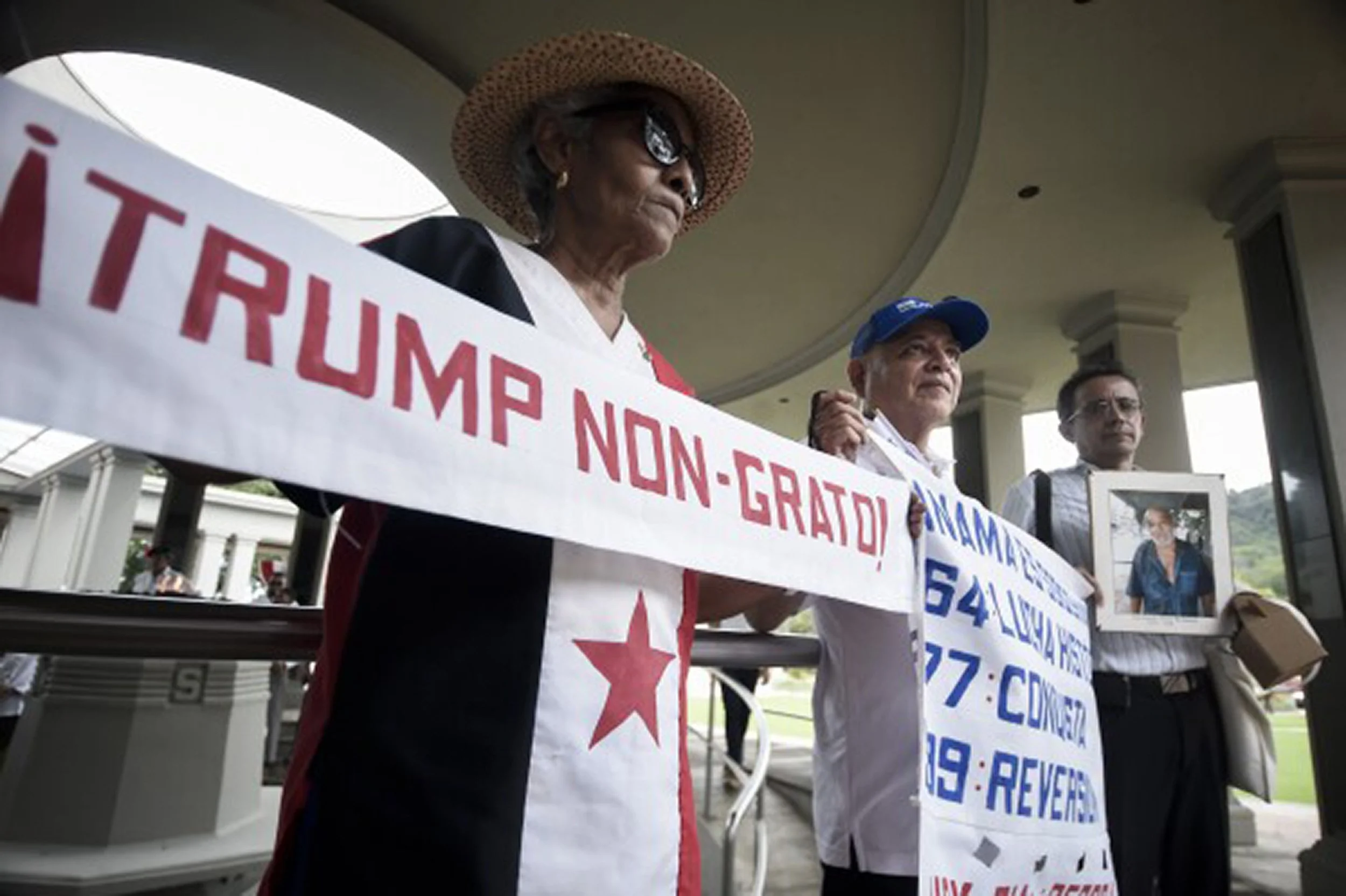
Martyrs’ Day commemoration in Panama, 2025. Image swiped from an AP news article.
Fri., 9. Martyr’s Day in Panama commemorates those killed during a 1964 uprising over the US-Panama agreement regarding control of the Canal Zone, as laid out in the treaty of 1903. According to the EBSCO research database, the seeds of the conflict began in 1963, when Pres. John F. Kennedy agreed to allow Panama’s flag to fly alongside the US flag in the Canal Zone, which, to Americans living there (“Zonians”), signaled a relinquishing of American sovereignty over the zone.
After JFK’s death, the Canal Zone governor, Robert J. Flemming Jr., declared that neither flag should fly over civilian buildings. Indignant Zonians defiantly hoisted the American flag over three high schools, prompting protests and counter measures from Panamanian students, including an attempt to raise the Panamanian flag as well. The conflict escalated, police were called, then US military forces brought in, which eventually led to the killing of 22 Panamanians. The names of those individuals are listed at the Martys’ Memorial in the city of Colón, Panama.
In 1977, Pres. Jimmy Carter signed treaties that led to Panama gradually assuming control over the canal by 1999.
Wed., 14. Makar Sankranti is a Hindu festival that celebrates the sun’s turning toward the northern hemisphere as it enters the sign of Capricorn, according to Vedic astrology calculations. It’s the first sankranti (new zodiac sun sign) since the winter solstice.
In Tamir Nadu, in southern India, the holiday is known as Pongal and is a four-day thanksgiving harvest festival. It includes a celebration of cattle on the third day (Mattu Pongal), when they are bathed and decorated with pigment, flowers and other adornments. Pongal is also the name of a sweet rice dish made with milk; one of the iconic objects of the festival is the rice pot used for this.
Sun., 18. World Religion Day (third Sun. in Jan.) was established in 1950 by the Bahá’í of the US to urge members of all religions to recognize their common values.
Mon., 19. The third Monday in January became a US federal holiday in 1983 to honor slain civil rights leader Martin Luther King Jr., who was born on Jan. 15, 1929.
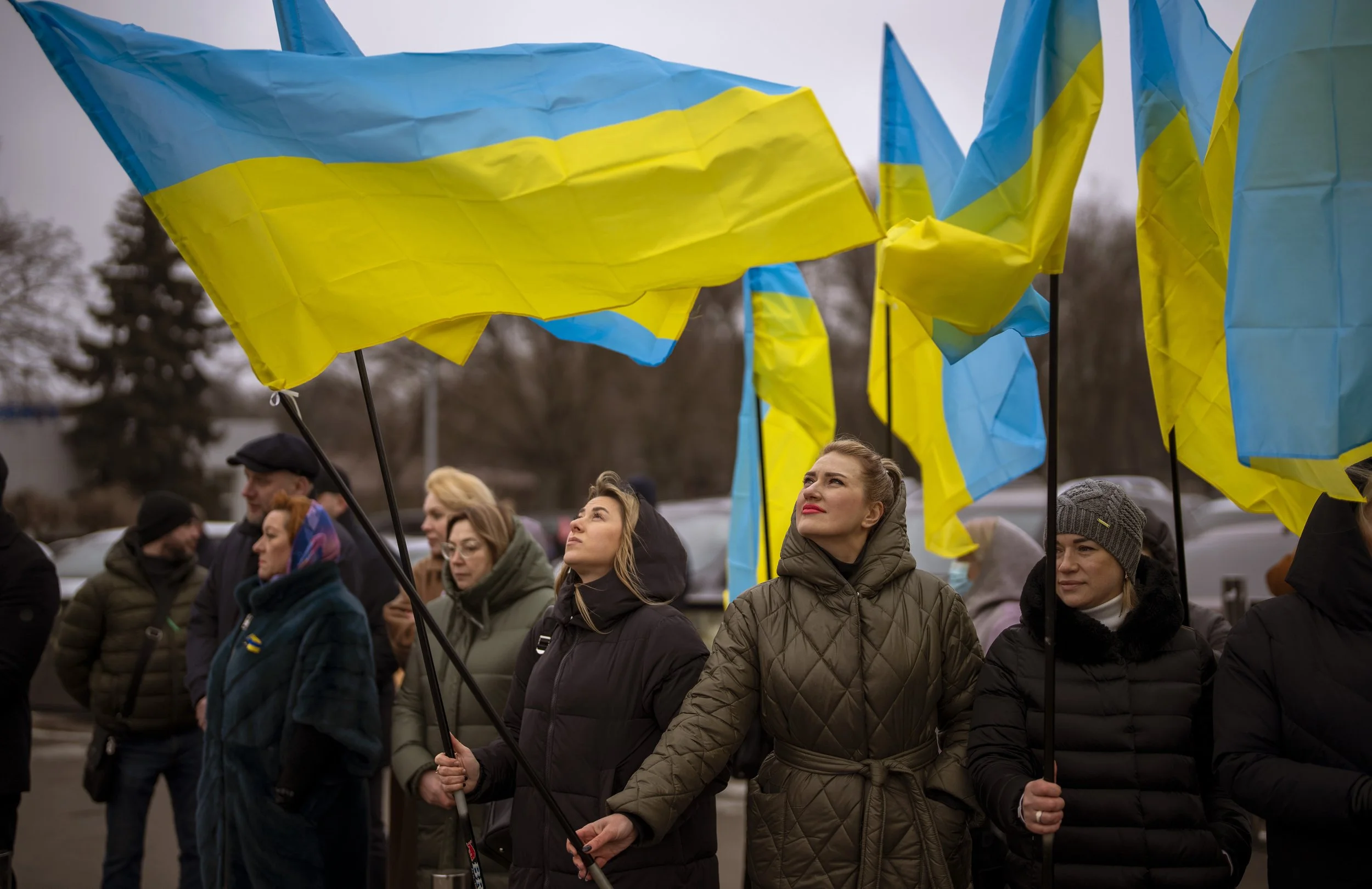
Image swiped from a 2022 article in Al-Jazeera.
Thu., 22. Ukraine Unity Day commemorates the Unification Act (aka Act Zluky), passed on this day in 1919, uniting the eastern and western halves of Ukraine, which until then had belonged to different empires. It has traditionally been observed with concerts and demonstrations, and by forming human chains across bridges with everyone holding a Ukraine flag to symbolize the unity of the whole nation. All holidays in Ukraine have been suspended under martial law.
Fri., 23. Vasant Panchami honors Saraswati, the Hindu goddess of learning. It heralds the beginning of spring, culminating in the spring festival of Holi 40 days later. Also celebrated by Sikhs.
Sun., 25. Burns Night celebrates Scottish culture and the life and work of Robert Burns. It is not an official holiday anywhere, but rather an observance enjoyed by lovers of literature and Scottish folk tradition. People gather for a Burns supper featuring traditional Scottish food and drink, the reading aloud of some of his poetry, and to sing “Auld Lang Syne”.
Read a biography of Burns and his times at the Poetry Foundation, or just click on the links to his poems in the side column.
Mon., 26. Australia Day is the anniversary of the arrival in 1788 at Sydney Cove of eleven ships carrying convicts from Great Britain, establishing the first English settlement there. Today it is a celebration of the nation’s diversity, heritage, and future.
Tue., 27. International Holocaust Remembrance Day, officially called International Day of Commemoration in Memory of the Victims of the Holocaust, marks the anniversary of the day in 1945 when Soviet troops liberated the concentration camp at Auschwitz.