Notable February Days
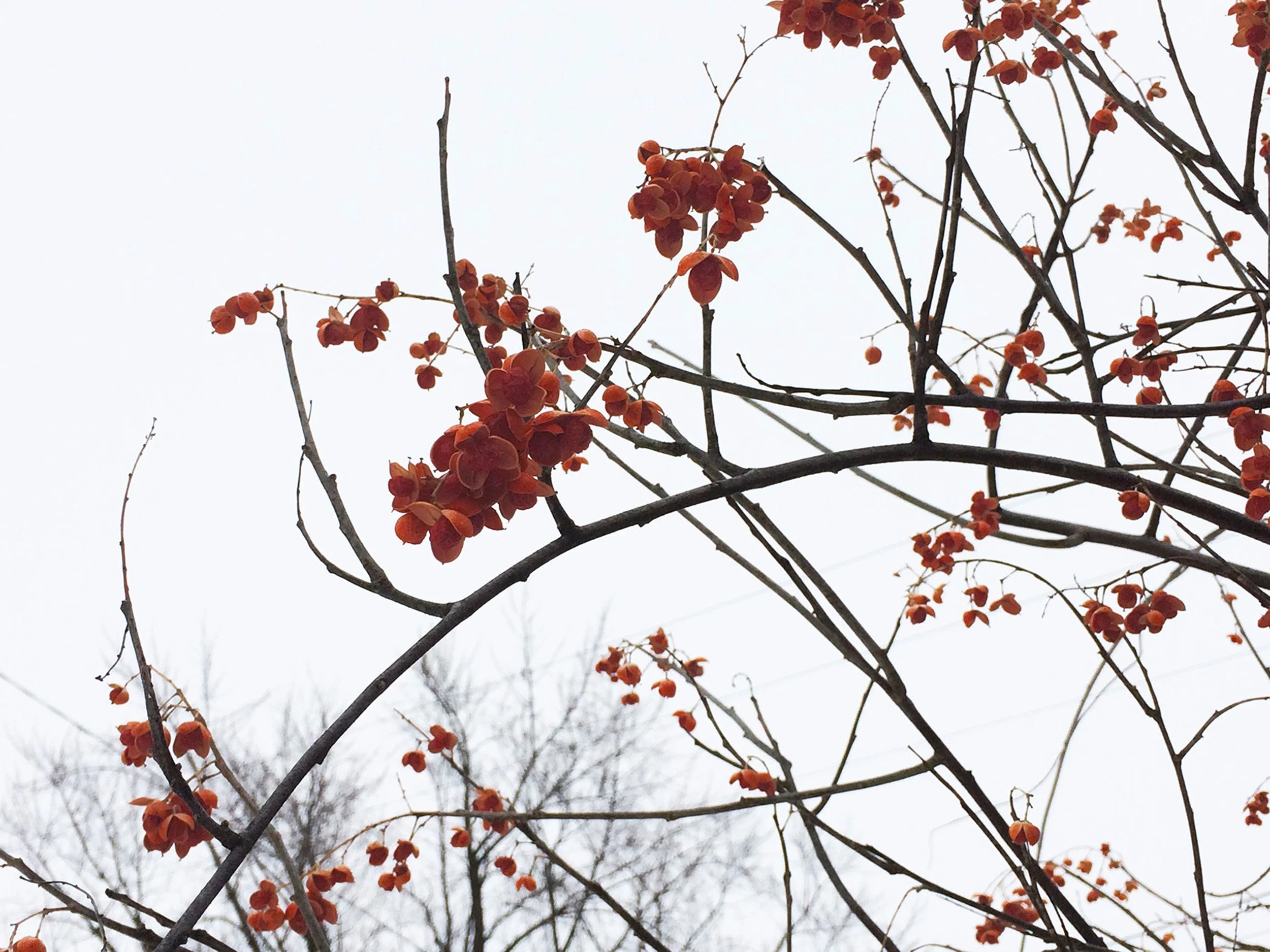
American bittersweet, Minneapolis, Minnesota
February is named for the Roman purification ritual (februa) that occurred around the middle of this month. The Christian holiday of Candlemas, observed on February 2, is also associated with purification—of Mary 40 days after the birth of Christ.
What began 100 years ago as Negro History Week, expanding upon popular celebrations of the birthdays of Abraham Lincoln (Feb. 12) and Frederick Douglass (Feb. 14), became Black History Month in 1976.
The first of February is also the birthday of Black American poet Langston Hughes, who wrote an excellent poem that speaks to our present moment, Let America Be America Again.
Sun.–Mon.,1–2. Imbolc, St. Brigid’s Day, Candlemas and Groundhog Day all occur at about the halfway point between the winter solstice and spring equinox, identified as a cross-quarter day by pagans.
The name Imbolc refers to ewes beginning to lactate as their lambs are being born. The festival honors Brigid, the goddess and the saint, both known as the matron of childbirth and midwives, hearthfire and the foundry (smithing), domestic animals, care of the earth, poetry, and wisdom. Beginning in 2023, the first Monday in February became an official holiday in Ireland, honoring St. Brigid and Imbolc.
Whatever the name, these holidays are all associated with folklore about the arrival of spring weather.
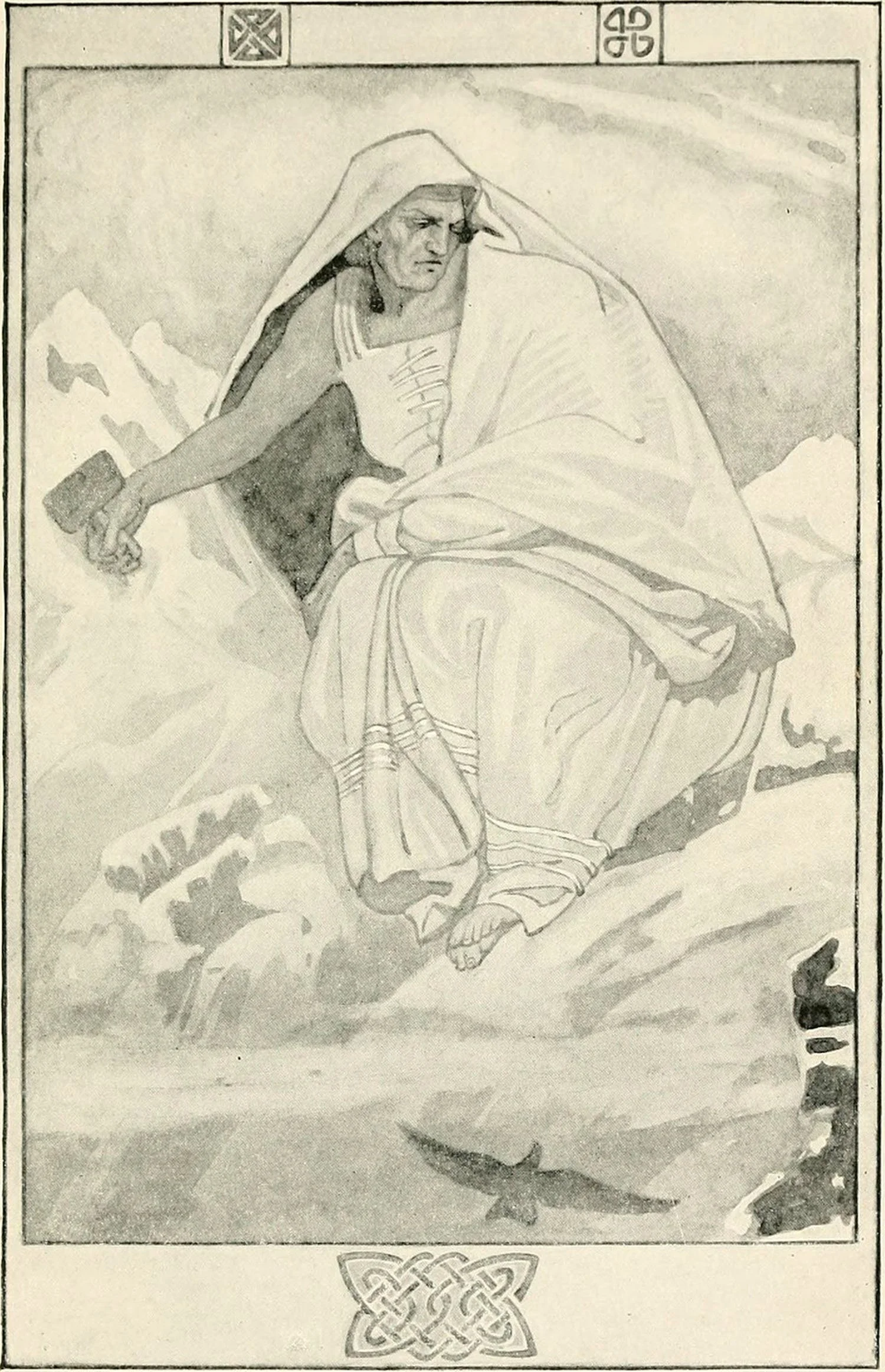
A Gaelic legend says that the “divine hag” Cailleach gathers her firewood for the rest of winter on Brigit’s day. If she knows the winter will last much longer (or intends to make it last), she will make sure the weather is sunny so she can find lots of dry firewood, but if winter will soon be over, she sleeps in and lets the clouds cover the sky, thus heralding an early spring.
In Germany, an old custom held that a badger (or a hedgehog) would emerge from hibernation on Candlemas Day, and if it saw its shadow, would return to hibernation, thus forecasting a continuation of winter. When German immigrants settled in Pennsylvania, they continued the tradition but substituted a groundhog because there were no badgers (or hedgehogs) in that region.
Mon., 2. Often called the New Year for Trees, Tu B’Shevat is a minor Jewish holiday promoting environmental awareness and action, and tree planting. Observance begins at nightfall on the first with a seder featuring fresh fruits.
Mexico’s Constitution Day marks the adoption of the document in 1917.
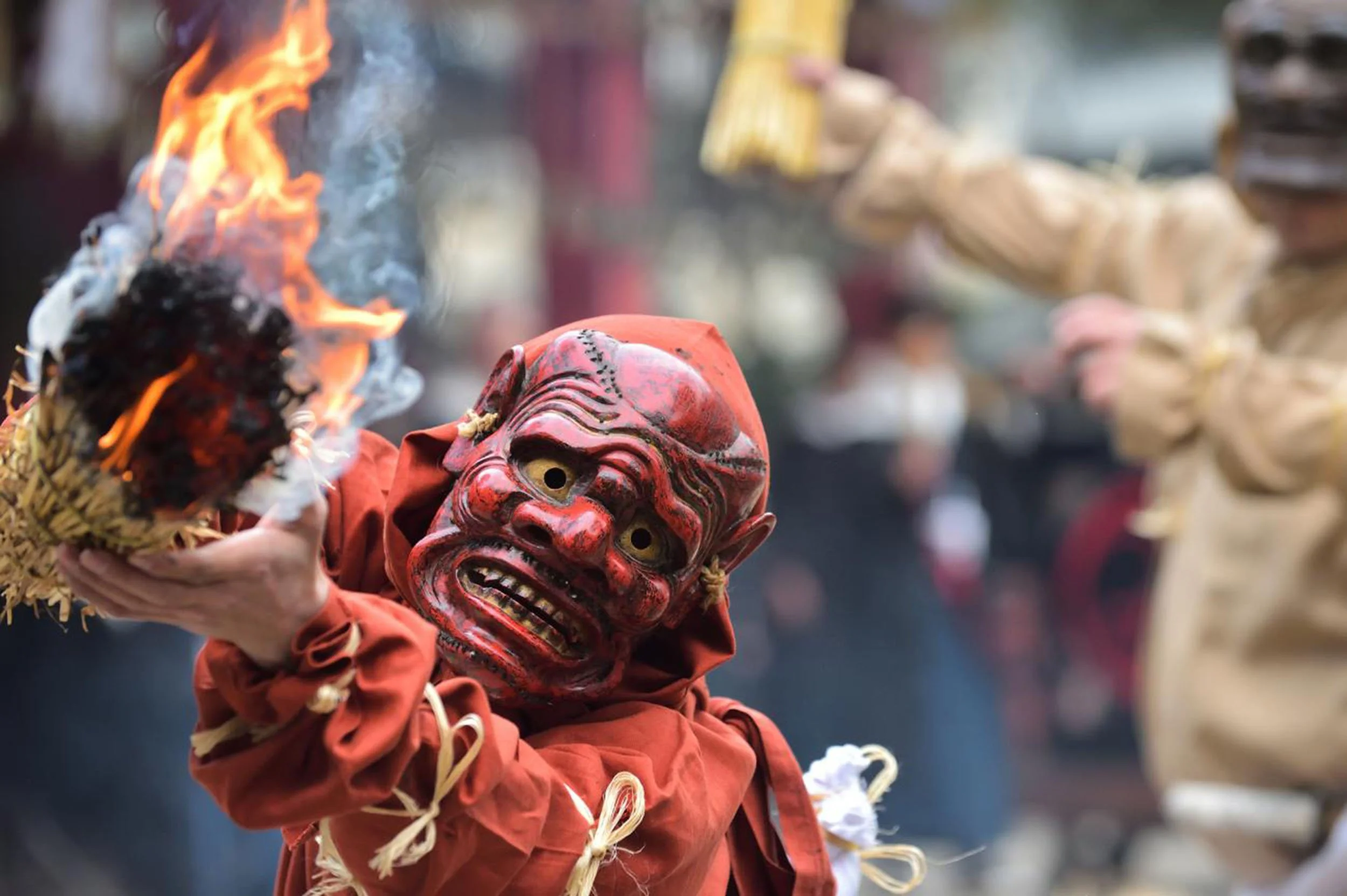
Setsubun image swiped from Rakuten Travel.
Tue., 3. Setsubun is a spring festival in Japan that is also tied to the midway point between the solstice and equinox. It’s known as the bean-throwing festival because people dress up as demons and other people throw beans at them to drive them away.
Fri., 6. Adopted by the Sami Nordic Council in 1992, Sami National Day is observed by Samis in Norway, Sweden, Finland and Russia, and also by the Sami diaspora.
Sun., 15. Parinirvana recalls the death of the Buddha and the impermanence of all things.
Today is Flag Day in Canada.
Thu., 12. Darwin Day is the birthday of English naturalist Charles Darwin. Today is also the birthday of Abraham Lincoln—both men were born in 1809.
Lincoln’s Birthday is an official holiday in a few states, but not at the federal level. In many states, the informal renaming of Washington’s Birthday as Presidents’ Day is intended to include Lincoln.
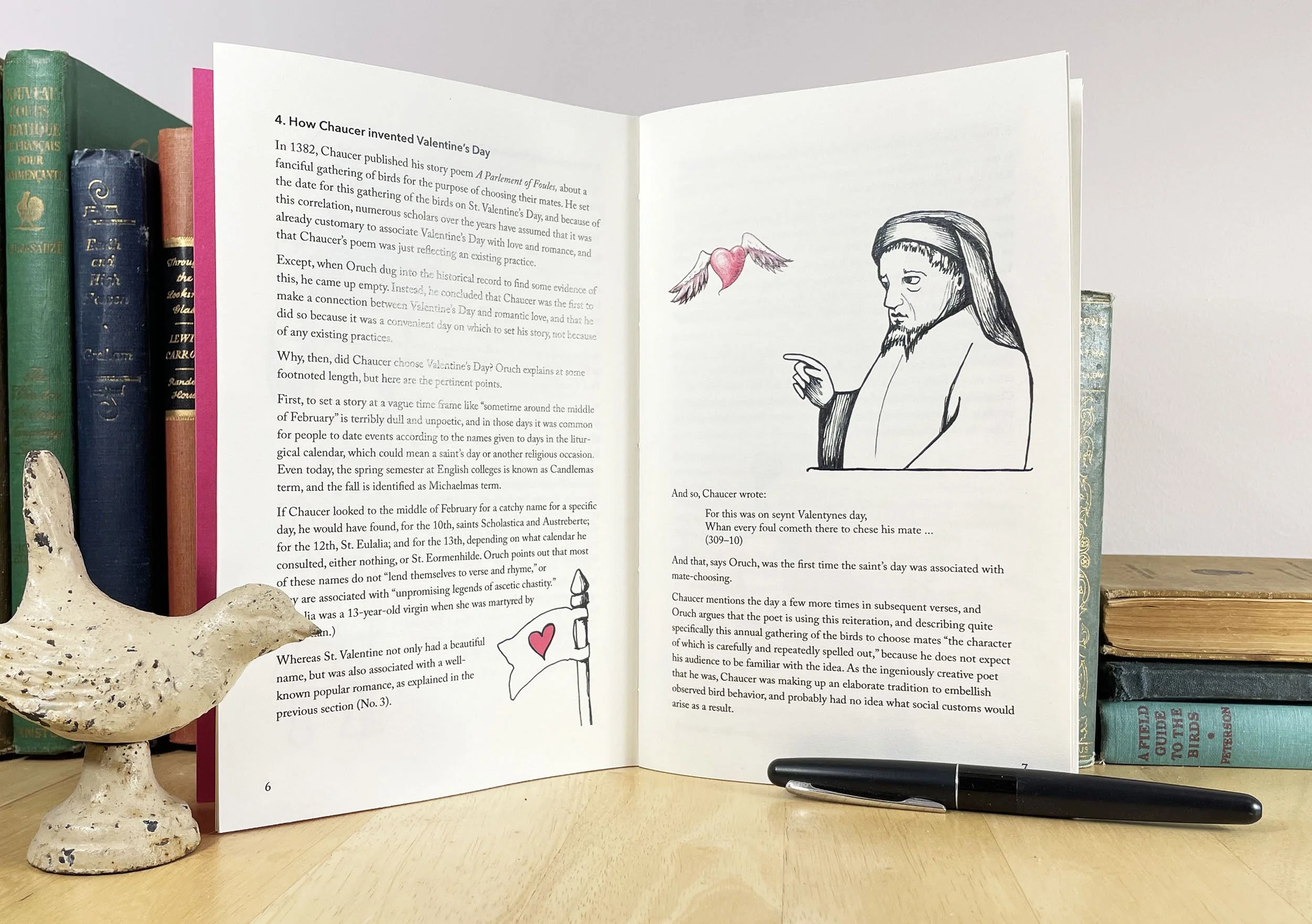
Sat., 14. The custom of romantic correspondence and gift giving on Valentine’s Day began in 14th or 15th century England and France, and was inspired by Chaucer’s story-poem A Parlement of Fowles. Learn more about the history and folklore of this holiday in my zine 14 Things About Valentine’s Day.
Fri., 13–Mon., 16. The Great Backyard Bird Count was started in 1998 by the Cornell Lab of Ornithology and National Audubon Society (of the US) to enlist volunteers in a massive collection of data about wild birds. It is now an international citizen-science project.
Mon., 16. Presidents’ Day is still officially called Washington’s Birthday. Washington’s actual birthday was Feb. 11, 1731, according to the Julian calendar then followed by Britain and the colonies; it was changed to Feb. 22, 1732, when the Gregorian calendar was adopted by Britain in 1752, which also required a shift of 11 days to correct for accumulated errors. It became a federal holiday in 1879, and was moved to the third Monday in 1968, ensuring that it never falls on Washington’s actual birthday.
Mon., 16.–Sun., 22. Maslenitsa, also called Pancake Week, is a pre-Lenten festival for Orthodox Christians of Slavic heritage.
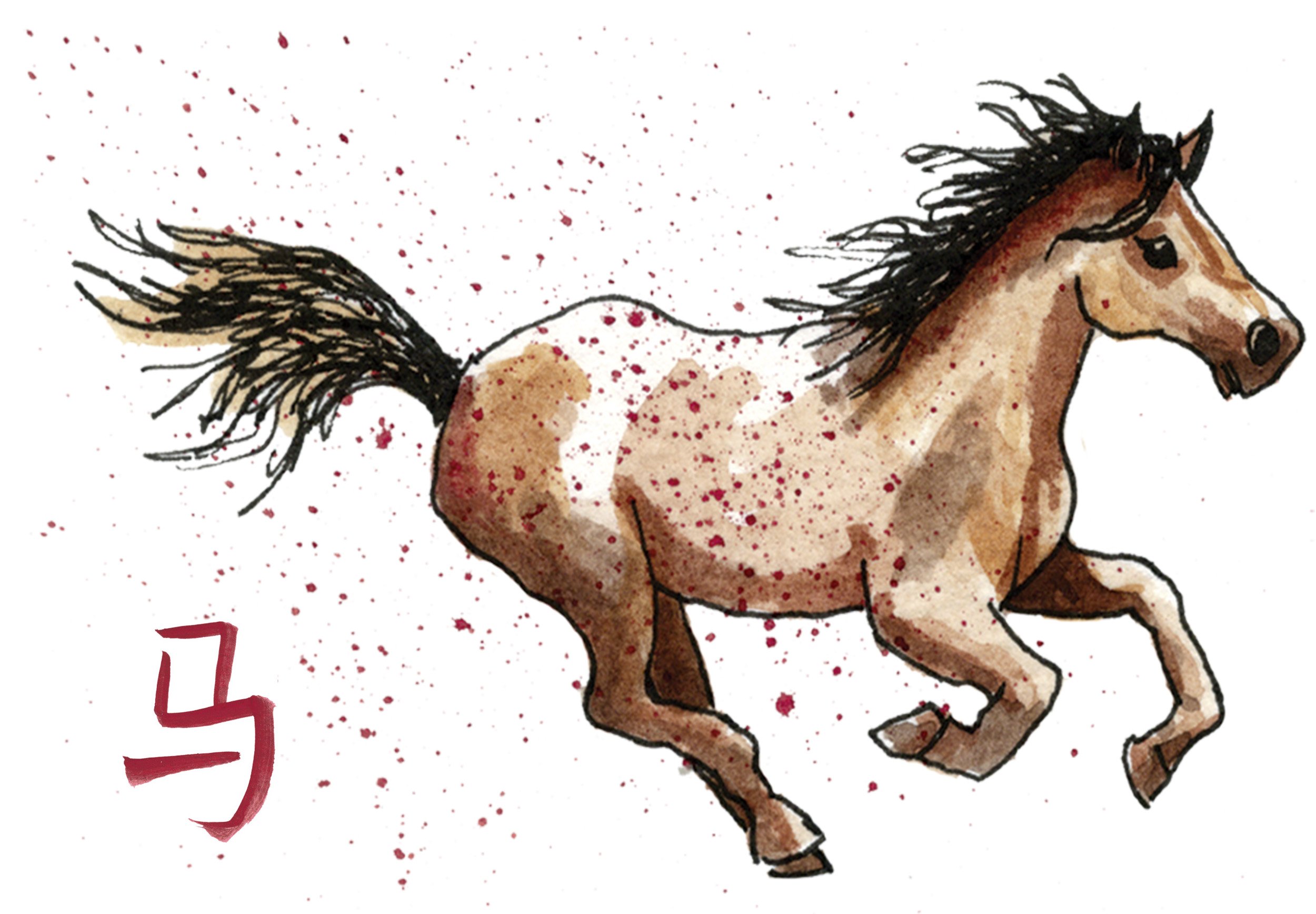
Tue., 17–Sun., 23. The Spring Festival Golden Week, as observed in China and other East Asian countries, begins with the Lunar New Year, ushering in the Year of the Horse. The larger (unofficial) observance lasts two weeks, ending with the Lantern Festival on March 3.
Tue., 17. Mardi Gras
Wed., 18. Losar is the Lunar New Year in Tibet, Bhutan, Nepal and India.
Ramadan, the Islamic holy month of fasting during the daylight hours, begins today. The post-sunset meal is called iftar. Ramadan ends on March 19, followed by the festival of Eid-al-Fitr.
Ash Wednesday is the beginning of Lent, a period of limited fasting for Christians during the 40 days leading up to Easter.
Mon., 23. Clean Monday is the beginning of Orthodox Lent.
Wed., 25–Sun., March 1. Meaning Days of Ha, Ayyam-i-ha comprises the Bahá’í intercalary days before the last month of the Bahá’í calendar; it’s a time for hospitality, charity and gift giving.
Sat.., 28. Peace Memorial Day honors the Taiwanese who were massacred by government forces on this day in 1947 after a public uprising against an oppressive military regime led by Chiang Kai-Shek.