Spring Yard Chores: Letting Sleeping Insects Lie
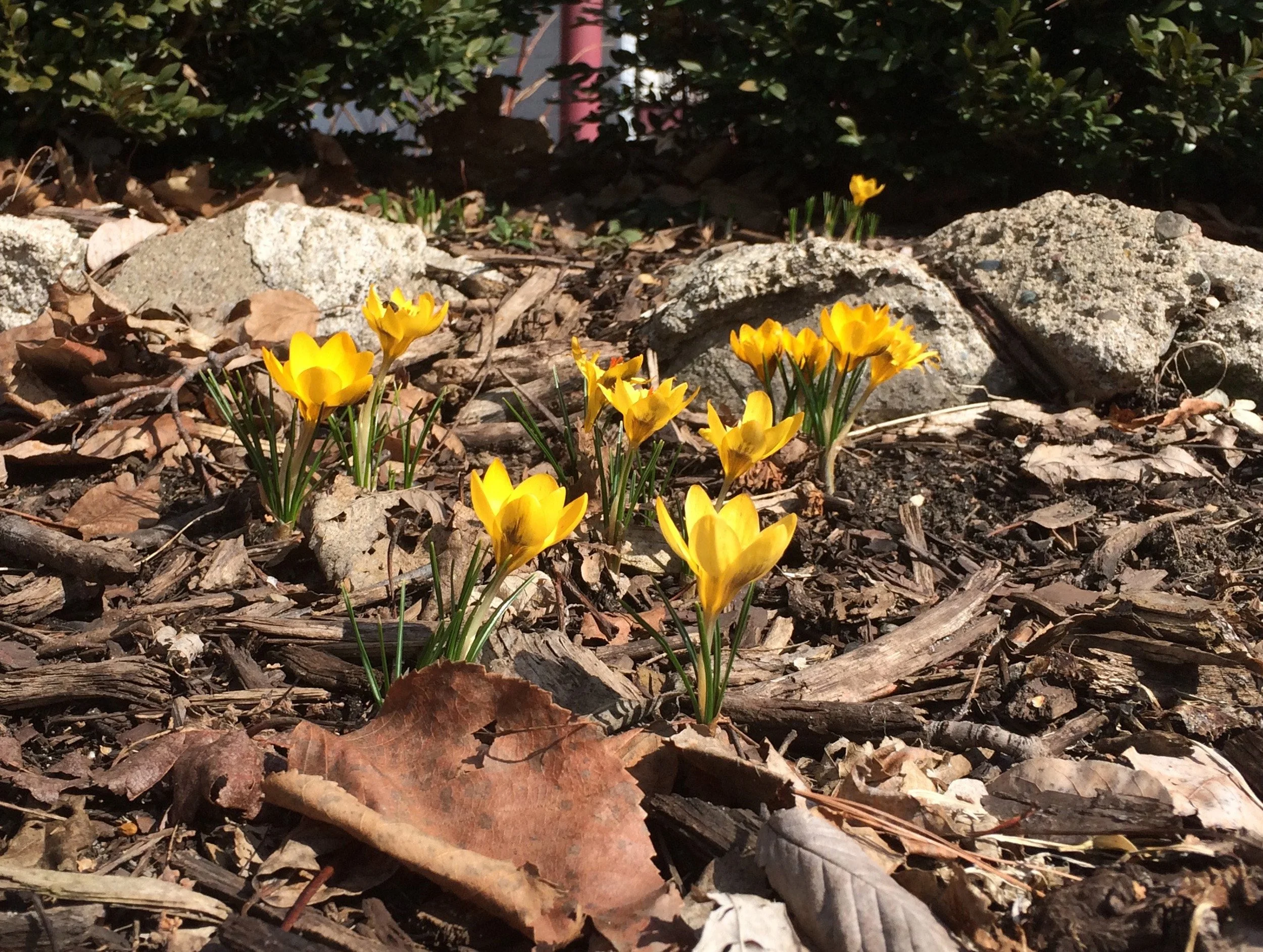
There is nothing like a Northern spring: it’s muddy, messy, mostly gray, and often feels just like winter. When a thaw arrives in February and lingers for a full week, you could be tempted to forget, for a moment, that spring never comes this early—it’s “false spring.” But then comes March and the snow is melting for real and the sun is climbing higher in the sky and you might be tempted to think this time it’s really happening.
And then as we near the spring equinox … Boom! We get a foot of snow dumped on us with howling winds and closed highways and a whole lot of bluster. A mid-March storm such as this is so common in Minnesota that it has a name, the “tournament blizzard,” because it coincides with one of the state’s high school sports tournaments taking place this month.
It’s the reason we keep our shovels handy until May Day, no matter how springlike it feels.
Winter’s many encores do get a little tiresome, and while we share with other homeowners a certain impatience to reclaim our outdoor spaces as soon as we can get at them, our spring garden rituals have changed over the years as we keep learning more about how our yard-cleaning practices can harm the insects and birds that live here too. Mostly, that means doing less, but this spring we’re adding a new chore to our spring preparations: taking down the strings of lights that have brightened our long winter nights.
Leaving the Leaves, and the Stems
The decline in insect populations, dubbed by many the “insect apocalypse,” has been well-documented for several years, and while its impact on food production due to the loss of pollinators has been much discussed, scientists now suspect that it is also contributing to a decline in birds. Why? Because birds rely on an insect banquet to get the protein they need to thrive, especially in spring as they return from migration and begin nesting and breeding.
The twigs and leaf litter that fall on our yards in autumn are home to the larvae of butterflies and other insects, so we stopped cleaning up the leaves some time ago. We do move leaves off the lawn, but we don’t bag them up to be hauled away; instead, we spread them around shrubs and trees as mulch, or place them on top of the compost pile, to be left undisturbed until the weather warms—really and consistently warms. We do not remove the mulch in spring, but leave it in place to provide habitat for tiny critters and to nourish and protect the soil.
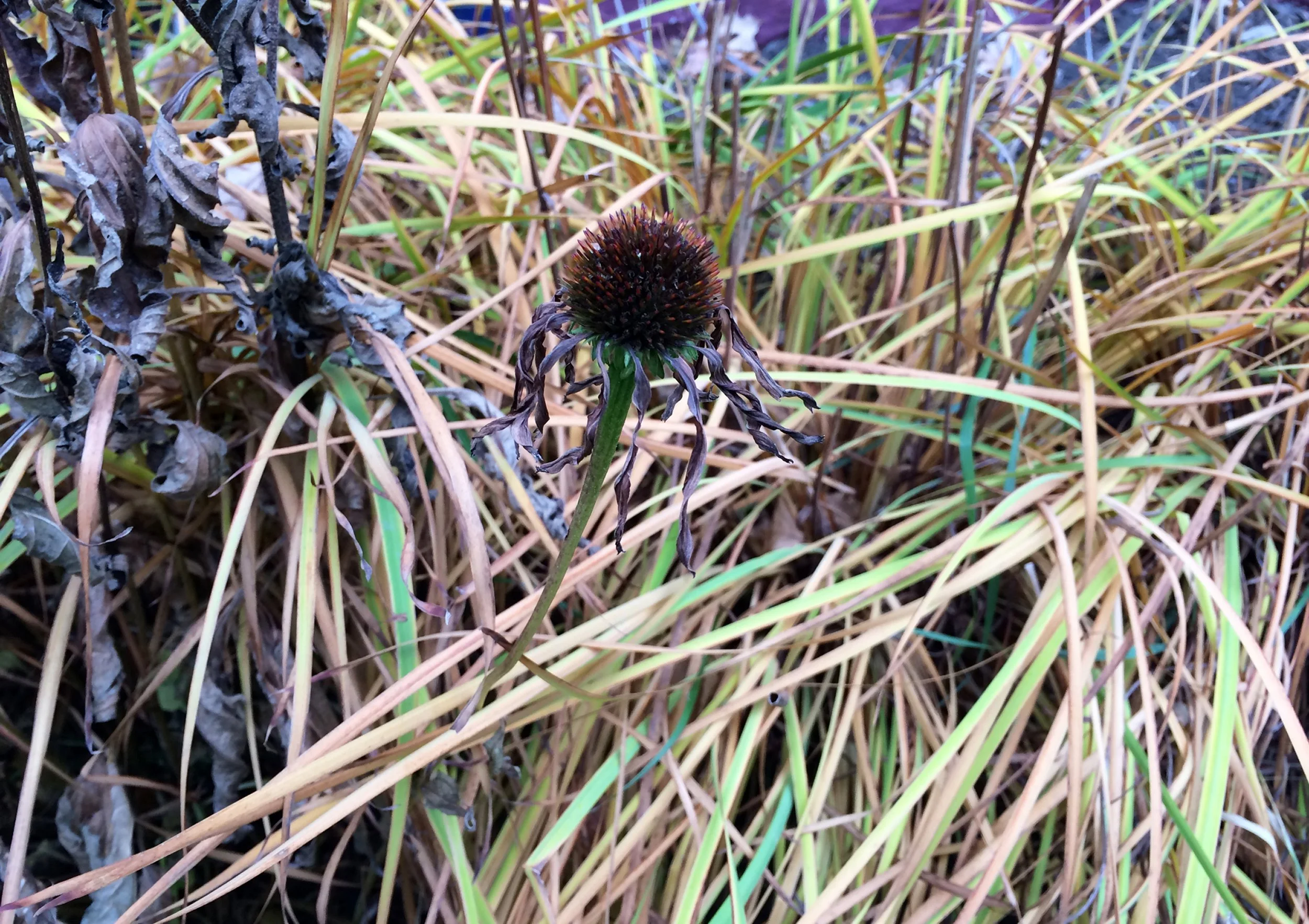
We also leave the seedheads of the flowers and grasses standing through winter. I like the aesthetics of those plant tops poking up through the snow, but there’s also a practical reason: They help hold the leaf litter and snow in place, protecting the roots of perennials so they don’t get fooled by one of those false springs and start to grow too soon, only to be zapped by a sudden return to winter weather. And there’s an added bonus—rather, a necessity—which is to provide food for our winter birds.
I was surprised one winter when looking out of our bedroom window to see chickadees chattering on the fence next to the tall remnants of garden phlox left standing in our neighbor’s yard. They were eating the phlox seeds!
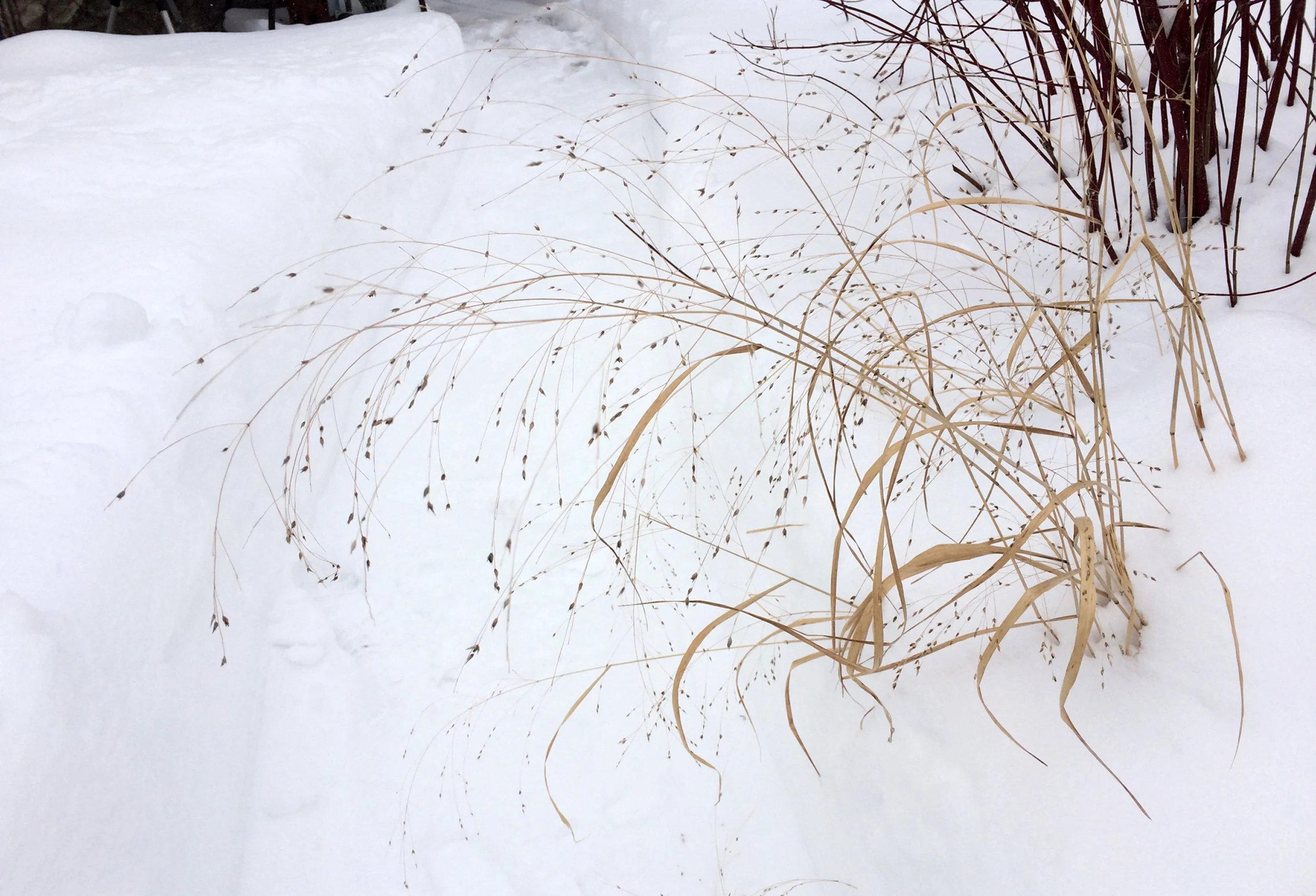
On another occasion, I watched juncos hopping and fluttering to pluck at the tops of my switch grass, which scattered the seeds across the surface of the snow, where the little birds snapped them up.
In the spring, instead of cutting those stems down to the ground, we cut them at about a foot high so that our native solitary bees have a place to lay their eggs in the cut stems. Those bees will hatch and emerge the following spring, once temperatures warm and nectar-producing flowers start to bloom.
Come June, new growth will hide the cut stems, and the older stems will gradually break down enough on their own, so we don’t need to do anything with them. (I’m not talking about disease-prone garden plants like peonies and hostas—those are best cleaned up in the fall, with their leaves and stems discarded, so the disease spores don’t infest the new growth.)
Natural Fairy Houses
We also make a few discreet small brush piles here and there—behind shrubs, next to the garage or fence, amid the coralberry that has formed a small thicket. I place the woody stems on the leaves from last fall, which lay on top of other stems from last year’s prunings, like a forest floor—to provide habitat for several types of beneficial insects, shelter for ground-feeding birds, and, yes, even for mice, whose abandoned burrows are often adopted by bumblebees for nest sites.
We do end up bundling some of those twigs—especially the thorny rose canes!—for the city to take away, but we hang on to the bundles until late May in case there are any chrysalids attached to them that need warm nights before their butterflies emerge.
I often think of the little brush piles as a kind of natural fairy house—and you can make them more structured, like mini log homes, if you have the time and inclination. You could even add cute little doors or ornamentation, using only nontoxic materials, of course; but don’t get too tidy about it. Be sure to fill them with leaves and grass and other natural nesting materials. You never know, a queen bumblebee just might move in. I once had bumblebees move into a birdhouse after the birds were done with it, leaving their nest for the bees to adapt to their own purposes.
And Then There’s the Fairy Lights
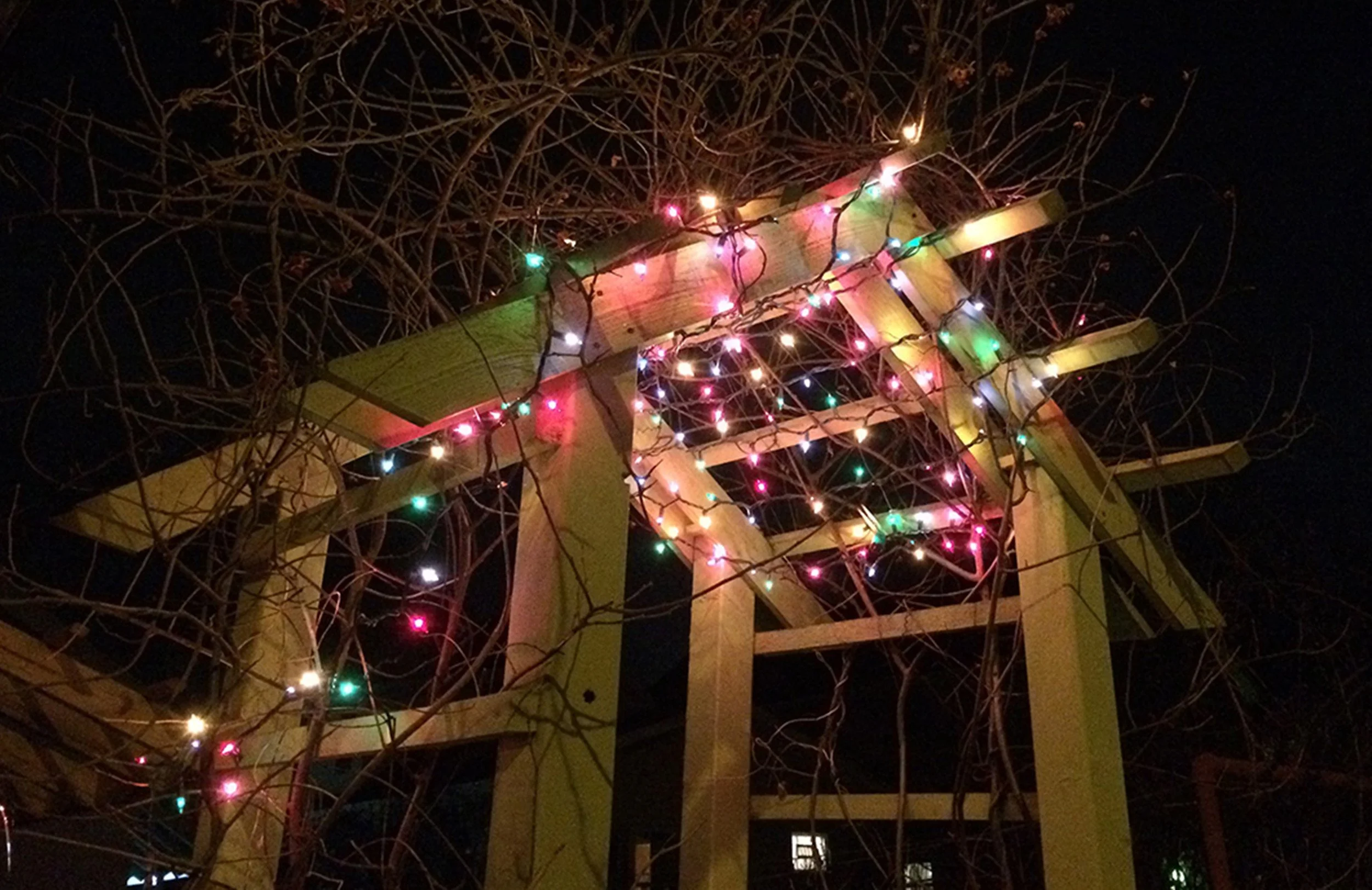
About those fairy lights—as I mentioned, we’ll be taking down our string lights. All of our efforts to preserve the mulch for the insects in their dormant winter state will come to nought if the adults can’t reproduce, and that’s a serious problem for fireflies—whose larvae are among those snoozing among the leaves all winter—if our outdoor lights interfere with the signals they use to find each other. The best fairy lights are the ones created by the fairies themselves (that is, the fireflies).
In addition to turning off decorative lights, it’s important to make sure other outdoor lights are equipped with motion sensors so they’re not on constantly throughout the night. (Or, in our case, figure out how to adjust them so they turn off like they’re supposed to!)
Outdoor lighting also causes problems for moths, but that’s a bit more complicated, and a topic for another post a little later this spring, about evening or moon gardens.